
· By Nick Fernandez
Publisher Email Advertising Can Reach Customers Beyond Your CRM
Key Takeaways
- CRM marketing is used to maintain relationships with current customers and attract new ones.
- Opt-in publisher audiences may increase reach, but verify consent, audience quality, volume, engagement, and delivery.
- Just as you wouldn't determine the success of a campaign based on open rates, success should be judged by qualified clicks, conversions, incremental reach, and acquisition costs.
Email continues to be a key media channel, but it is not the only way to reach an audience when you use your brand's own customer relationship management (CRM) database. Email advertising from publishers is another way to insert a message into a newsletter that consumers have chosen. For senior marketers and agency management, the chance is to broaden the scope while avoiding head-scratching third-party permission from brand ownership.
Understanding Brand-Owned CRM and Publisher Email Advertising
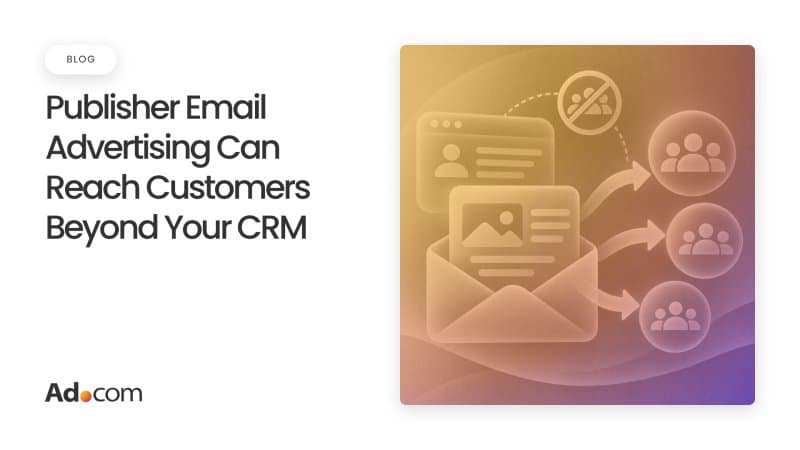
These emails are sent to customers who have willingly handed over their personal data to the business when purchasing, registering, subscribing, or simply via engagement. CRM owned emails support retention, product upsell, cross-sell, education, and repeat sales. The database and segmentation, messaging, and delivery are retained by the brand.
Third-party opted-in newsletter advertising is unique. Publishers distribute their own newsletters to their customers, and advertisements simply direct customers to another brand's product or service. Advertisers pay a premium for exposure within an existing publisher environment, instead of directly subscribing the user to their own CRM database. This is significant as exposure with a publisher does not mean they are permitted to direct market to the consumer.
Why Publisher Newsletters Provide Extra Reach to Your Audience
A CRM database is built from people who have already purchased or had communication with a business. While these contacts can still be useful, they aren't the full addressable market. Publisher newsletters allow reaching readers who subscribe to “verticals, publications, authors, and content segments” the advertiser has not already purchased.
The reach and range of publisher audiences is shown in publisher info. Here are the examples below:
A publication, including all content channels, has 2.48 million newsletter subscribers according to Forbes' media kit.
An exhibition magazine's advertising and partnerships page shows that a publication has more than 79,000 newsletter subscribers interested in contemporary art and culture.
This can be especially useful to brands looking to tap into new professional verticals, niche interests, or even consumers that don't yet exist in their own databases.
What Email Industry Benchmarks Tell Advertisers
KPIs can be used to set testing expectations. They definitely cannot be treated as a proper measure of advertising return on investment for third-party newsletters as own marketing strategies and sponsored spots have a different goal to achieve their own target audiences.
As reported by MailerLite's 2025 Email Marketing Benchmarks Report, the report covered over 3.6 million email campaigns from 181,000 permission-based accounts in the period of December 2024 through November 2025. The data showed an average of a 2.09% median click rate and a 6.81% median click-to-open rate across all industries.
While these estimates provide good context around email opens and engagement, advertisers should not directly use these for publisher sponsorships. A mix of factors, including “campaign type, audience interests, publisher category, creative targeting, and measurement”, can produce significantly different results. Open rates are also somewhat unpredictable due to privacy features and automated activity that can influence the reported engagement.
Consent and Audience Quality Should Guide Investment
Just because you get in touch with someone through a publisher newsletter doesn't mean the advertiser has the person's email address. The publisher manages the subscriber relationship while the advertiser is provided with an advertising opportunity. Separating those duties protects audiences and expectations.
Advertisers should seek out documents addressing how recipients are signed up, any authorisations for commercial content, the unsubscribe process, what audience is being targeted, and the suppression process. The Federal Trade Commission's CAN-SPAM Compliance Guide outlines what is required of truthful sender information, how to identify the advertising, your physical address, and opt-out processes. It notes that you are responsible for any companies that send commercial email for you.
Crucially, compliance with the law and rigorous permission standards are not one and the same. CAN-SPAM does not set a blanket prior opt-in rule, but even in the case of an advertiser buying solo emails, a prior opt-in rule should be observed.
What Advertisers Should Test Before Scaling
Publisher email advertising should be treated as a test of an incremental media investment rather than a substitute for CRM campaigns. A test can be initiated with a limited audience, an identified campaign objective, and a transparent measurement program.
Consider testing these areas:
- Audience overlap: Understand your publisher audiences compared to your current CRM segments for incremental reach.
- Creativity application: Try different headlines, offers, and calls to action that you can do in a similar newsletter scenario.
- Quality engagement: Report on “human clicks, landing page activity, and actual engagement”, not the open rate reported.
- Tracking of the quality: Use the right attribution model to track registration data, quality leads, sales, and CAC data. Once we know who your ideal clients are and what they are interested in, we can target them accordingly.
- Inversion: When possible, compare the control groups or the proper comparison group in order to gauge the extra conversions it would have won from a decision.
Objective: To find out whether the publishers' newsletters bring high-quality leads. Not to know if the ad has been clicked, but rather if the newsletter offers more relevant visitors. Results must be evaluated over a proper conversion window, especially for longer purchase cycles.
Ad.com Email is a great solution for advertisers and agencies to reach a new audience and engage new customers. It is an opportunity to scale your advertising reach past your own customers. The site claims that it offers connections with opted-in audiences through newsletter and remarketing opportunities, such as targeted newsletter placements and re-engagement opportunities for interested consumers.
Conclusion
It offers brands an additional way to reach valuable audiences outside of their current CRM databases. The return on this type of activity depends on “audience quality, how permission has been obtained, relevant creative, and quantifiable incremental results”.
For senior marketers and agency leaders, the most appropriate strategy is to run publisher newsletters in parallel with current acquisition tactics and expand only once there's data to justify the additional investment.
Want to expand your message outside your CRM? Go to Ad.com and request a campaign conversation by leaving your contact information and campaign details on the site. Instead of considering a publisher's email address as just another list for distribution in CRM, marketers should look at it as an additional component of an overall acquisition strategy.
FAQs
What is the difference between email sponsorship and email marketing?
Email sponsorship inserts your brand's ad in another publisher's newsletter. Email marketing is typically when a company is speaking directly to its own subscribers or customer base. Both use email, but the relationship with the audience and campaign accountability are not the same.
Would promotional advertising be effective for B2B firms?
Yes. B2B firms may explore newsletters about small business ownership, technology, finance, professional development, and other industry topics. It all depends on whether their target decision-makers subscribe to the newsletter and not just the overall subscriber number.
How often should brands pay for advertisements in publisher newsletters?
A frequency that is effective for one campaign may not be for another. Remember to consider frequency based on newsletter publication times, campaign duration, and whether a reader will buy or not buy.
Are ads in publisher newsletters disclosed?
Yes. Commercial placements need to be clearly separated from independent content. Labels or other indicators that the content is advertising help show that what has been published is paid for and is not an independent editorial feature or opinion.
Can advertisers take the benefit of publisher newsletters for launches?
Yes. Email newsletters allow you to “target a defined audience, make them aware of your product, and direct them to a landing page”. Make sure your email is relevant to the newsletter content and have a way of tracking the campaign.