
· By Nick Fernandez
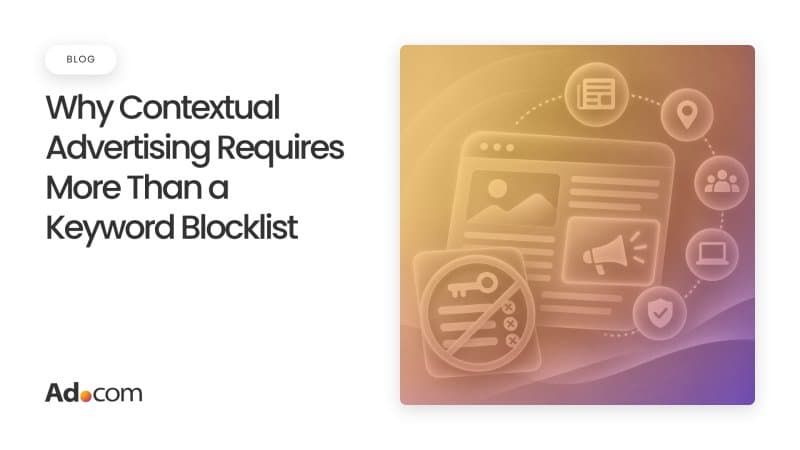
Why Contextual Advertising Requires More Than a Keyword Blocklist
Key Takeaways
- Page meaning, suitability, and placement quality are three separate jobs. A keyword blocklist does none of them well.
- IAS found that 54% of Reuters news URLs cleared as suitable would still trip a typical keyword list.
- In ANA’s Q1 2026 benchmark, the stronger advertisers turned 54.0% of spend into verified media. The weaker half managed 32.1%.
- Change one thing at a time: audit the list, set suitability tiers, trim your sites, then check what happens after the click.
- Contextual advertising matches ads to page content in real time. Bring your suitability rules to the first call.
Picture a planner on a Friday afternoon. She can read out her blocklist from memory. Ask what her ads actually sat beside last month, or whether the visits after the clicks were any good, and the room goes quiet.
That silence is where budget leaks. This piece pulls apart three ideas that get lumped together, shows what recent evidence says, and finishes with tests you can run this quarter.
What Separates Page Meaning, Suitability, and Placement Quality?
People use these words as if they were interchangeable. They aren’t. Each one answers its own question and needs its own fix. Mix them up, and you’ll block good journalism while still paying for weak sites.
Check | Question it answers | Better control | Common failure |
Page meaning | What is this page about? | Taxonomy and semantic analysis | Stale labels |
Suitability | Does this topic and tone fit our brand? | Tiered rules per brand | Word matching |
Placement quality | Was this a fair chance to work? | Viewability, measurement, MFA checks | Sprawling supply |
Postclick action | Did the visit matter? | Engagement and conversion tests | Click-only reporting |
IAB Tech Lab describes its Content Taxonomy as a way to capture the “aboutness” of content. That’s page meaning. Suitability is your call as a brand. Placement quality is a supply question.
Why Does a Keyword Blocklist Fall Short?
Blocklists last because they’re cheap and easy to explain. Nobody needs a workshop to understand “avoid these words.” The trouble is that a list checks whether a word appears. It can’t tell you what the page means, how it reads, or where the ad ran. Studies from the past year show three cracks.
1. It Reads Words, Not Meaning
IAS and Reuters ran a test in 2026. Of the Reuters news URLs that contextual analysis cleared as suitable, 54% would still have triggered a typical keyword list. One film-shoot story got blocked because its URL contained the word shot.
Phil Andraos, general manager of Reuters Digital, said: "We believe that it is in everyone’s interest, including the marketers, not to use this tool at this point”.
2. It Ages Badly
Lists grow. They rarely shrink. ThinkNewsBrands audited 1,200 Australian news articles and found that 57% held at least one term that could trigger an exclusion. It also found that 38% of lower-sensitivity stories were wrongly excluded. The word Paris stayed on one list long after 2015.
CEO Vanessa Lyons called such lists “a wolf in sheep’s clothing”. Old rules cost you reach and add no protection.
3. It Ignores Supply Quality
A list can’t tell you whether an ad was viewable, measurable, or served on a made-for-advertising site. Those are placement questions. A perfectly suitable page can still deliver a wasted impression. ANA’s data suggests that’s where most of the lost money sits.
What Does ANA Evidence Say About Placement Quality?
ANA’s Q1 2026 Programmatic Transparency Benchmark splits participating advertisers into a stronger half and a weaker half. Its TrueAdSpend metric counts spend that reaches fraud-free, measurable, viewable, non-MFA impressions.
Measure | Stronger half | Weaker half |
TrueAdSpend | 54.0% | 32.1% |
Average CPM | $5.45 | $7.40 |
TrueCPM | $7.46 | $19.04 |
Non-measurable spend | 8.1% | 21.4% |
Domains and apps used | 32,998 | 67,049 |
Source: ANA Q1 2026 Benchmark
Here’s the part worth sitting with. The gap didn’t come from fees. Transaction costs were 27.1% against 29.5%, while quality losses were 19.0% against 38.4%. MFA was small in both halves, at 1.1% and 0.8%. Missing measurement did the damage.
ANA says it plainly: “CPM tells you what you paid. TrueCPM tells you what you actually got.”
What Does IAB Tech Lab Guidance Add?
In December 2024, IAB Tech Lab added the OpenRTB fields genres and gtax, so sellers send standard genre values instead of free text. It also released Content Taxonomy 3.1. The same release noted that version 1.0, deprecated in 2020, raises the risk of mislabeling.
Katie Shell’s April 2026 paper argues that taxonomy IDs give automated buyers a reliable lookup. It also admits that taxonomies update slowly and that self-tagging creates incentive problems. So ask each partner which taxonomy version they read, and who checks the tags.
What Should You Test or Change First?
Run these four tests in order. Each one changes a single thing, so you’ll know what actually moved the numbers. Keep a simple log and go through it with your agency every month.
1. Audit the Blocklist
Pull up your current list and put a date next to every term. Then run it against 100 recent URLs your team already agrees are fine, and count how many get blocked. Swap single words for topic and tone rules. Keep a short list of hard exclusions that legal truly needs.
2. Set Suitability Tiers
Yes-or-no rules don’t survive real content. Try three tiers instead: avoid, proceed with caution, and fine. Pin two real articles to each tier, because examples end arguments faster than adjectives do. Revisit the tiers every quarter so decisions stay consistent across the team.
3. Trim the Supply Tail
ANA’s stronger advertisers used 32,998 domains and apps, against 67,049 for the weaker half. Count yours. Then build a curated list of sites with full measurement coverage and compare TrueCPM, not headline CPM, before and after. Fewer, measurable sites also make results easier to read.
4. Judge the Postclick Result
Clicks are cheap evidence. Look at landing page engagement and conversions for each content cluster, and keep a control group aside. If one cluster clicks well but bounces fast, the match was shallow, so shift spend toward contexts that bring real visits. Give it a window long enough to catch delayed conversions.
How Does Ad.com Contextual Fit In?
According to Ad.com’s Contextual page, the product uses real-time contextual signals to find relevant advertising opportunities around the content an impression sits beside. It works in four steps: understand the content, determine relevance against campaign criteria, place the message, and measure the response.
That last step matters for the post-click test above. Ad.com says its performance data shows which contexts contribute to stronger results. Contextual can also pair with Display, Native, Search, or Video. The page doesn’t describe suitability tiers or third-party verification, so ask about both directly.
Where Is the Evidence Thin?
Fair warning: don’t take any of this at face value. IAS sells contextual tools, and its Reuters study ran no test campaigns. It shows what lists would flag, not what ads were actually lost. ThinkNewsBrands says its figures are estimates, and its audit counts trigger terms, not blocked ads.
ANA’s benchmark covered 66 active marketers and $160 million of Q1 spend, which is a slice of the market. Its cost waterfall also leaves out brand safety metrics.
IAS adds that keyword-only blocking affects just 0.25% of its impressions, so exclusive use is rarer than headlines imply. Lists still catch real hazards. Independent post-click data on contextual is thin too, so your own holdout test is the proof that counts.
Final Thoughts
A blocklist answers one small question: which words should we avoid? Relevance asks for more. Read what the page means, set suitability brand by brand, check the quality of the placement, and judge what happens after the click.
Want to try it? Plan your Contextual campaign with Ad.com. Bring your current blocklist, your suitability tiers, and your top 20 domains, and ask the team to show how context signals would shape your plan.
Frequently Asked Questions
Is a keyword blocklist ever still useful?
Yes, as a narrow backstop for hard exclusions such as specific terms or domains your legal team requires. It works poorly as the main control, because it reads words and misses tone, topic, and intent.
How is brand suitability different from brand safety?
Safety covers content nobody should fund, such as illegal material. Suitability is tailored and tiered, asking whether a topic and its tone fit your message. The same article may suit one brand and not another.
What is placement quality in programmatic buying?
It describes whether an impression had a fair chance to work. ANA’s benchmark counts impressions that are fraud-free, measurable, viewable, and non-MFA, then reports the share of spend reaching them as TrueAdSpend.
What should I measure after the click?
Compare landing page engagement and conversions by content cluster, not click rate alone. Use a holdout group where possible, so you can tell whether context changed behavior or collected clicks that would have happened anyway.
What does Ad.com Contextual do, according to its page?
Ad.com says Contextual uses real-time content signals to match campaign criteria with relevant advertising opportunities, then measures which contexts contribute to stronger results. It can also pair with Display, Native, Search, and Video.